On Nov. 3, voters decide
Lumberton ISD Voter-Approval Tax Rate Election
Lumberton ISD voters will consider a Voter-Approval Tax Rate Election, or VATRE, on Nov. 3. If approved, the VATRE would provide approximately $2.5 million in additional annual operating revenue.
A One-Cent Question
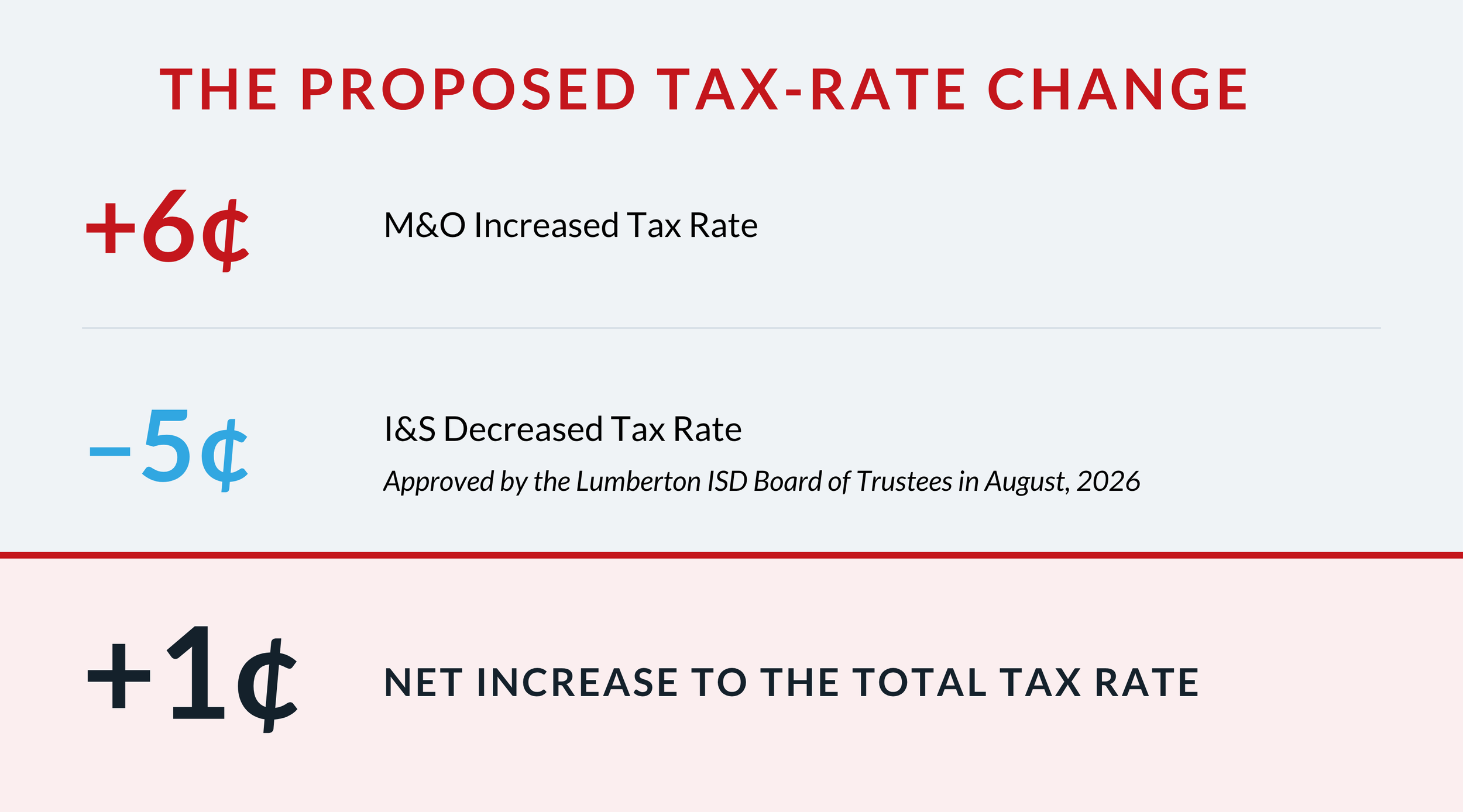
For every $100,000 of taxable property value, the estimated impact of the one-cent net increase would be $10 per year.
Why Lumberton ISD Called a VATRE
Lumberton ISD is projecting a $1.5 million annual operating shortfall caused by reduced funding, declining enrollment and rising operating costs.
Before calling the election, the district reviewed expenses throughout its budget and identified nearly $900,000 in reductions. These reductions were made without eliminating current student programs or services.
Additional budget reductions could affect staffing, class sizes, programs or services.
Nearly
$900,000
Budget reductions already identified
ESTIMATED
$2.5 million
Projected annual funding from the VATRE
1¢
One Cent
Net increase to the district’s total tax rate
Why does the ballot say six cents?
The ballot refers to a six-cent increase because voters are being asked to consider an increase to the district’s M&O operating tax rate. At the same time, Lumberton ISD will lower its I&S debt tax rate by five cents.
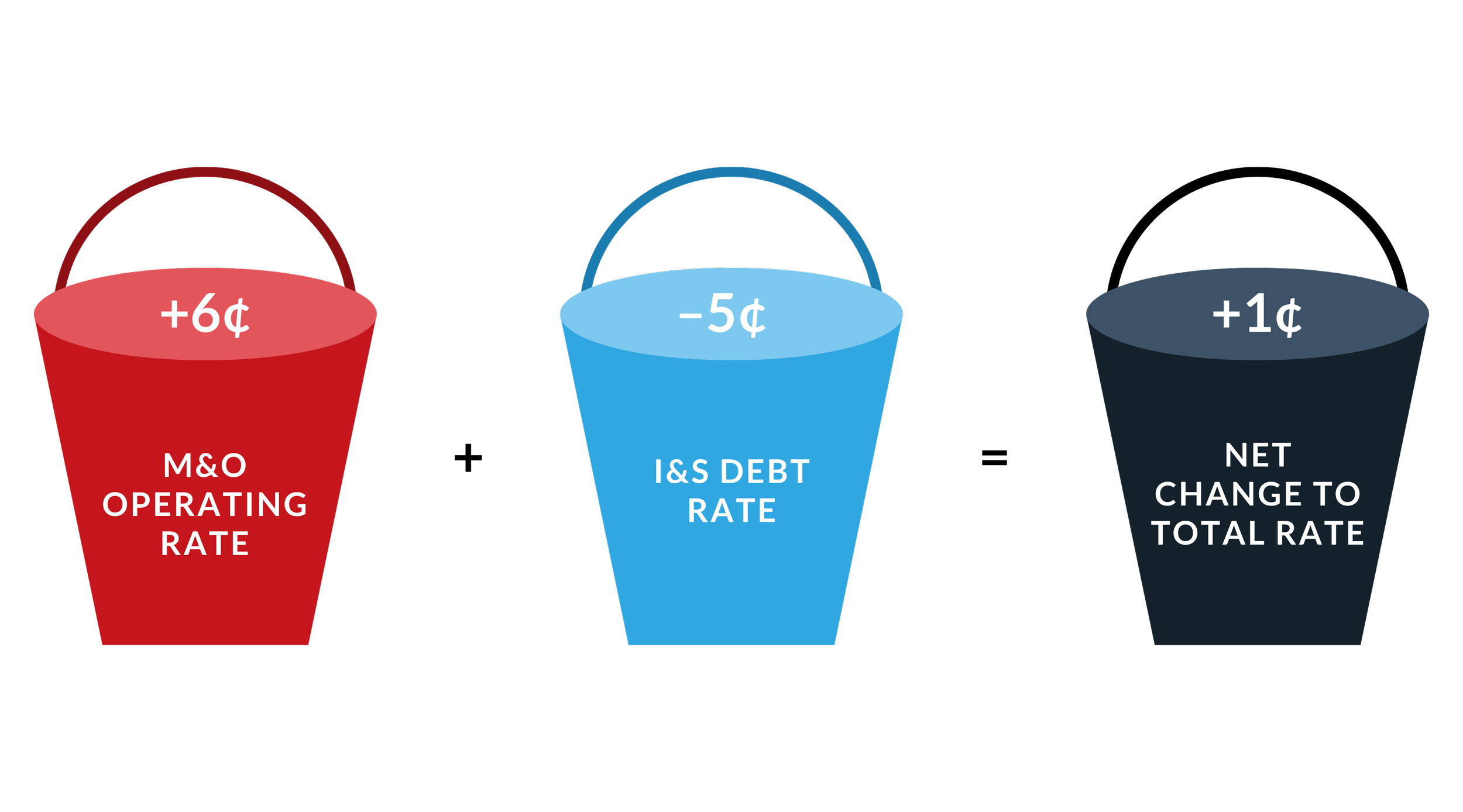
State law restricts M&O and I&S revenue to different purposes. Revenue collected for debt payments cannot simply be transferred into the district’s operating fund.
What would the one-cent increase cost?
A one-cent increase equals $10 per year for every $100,000 of taxable property value after applicable exemptions.
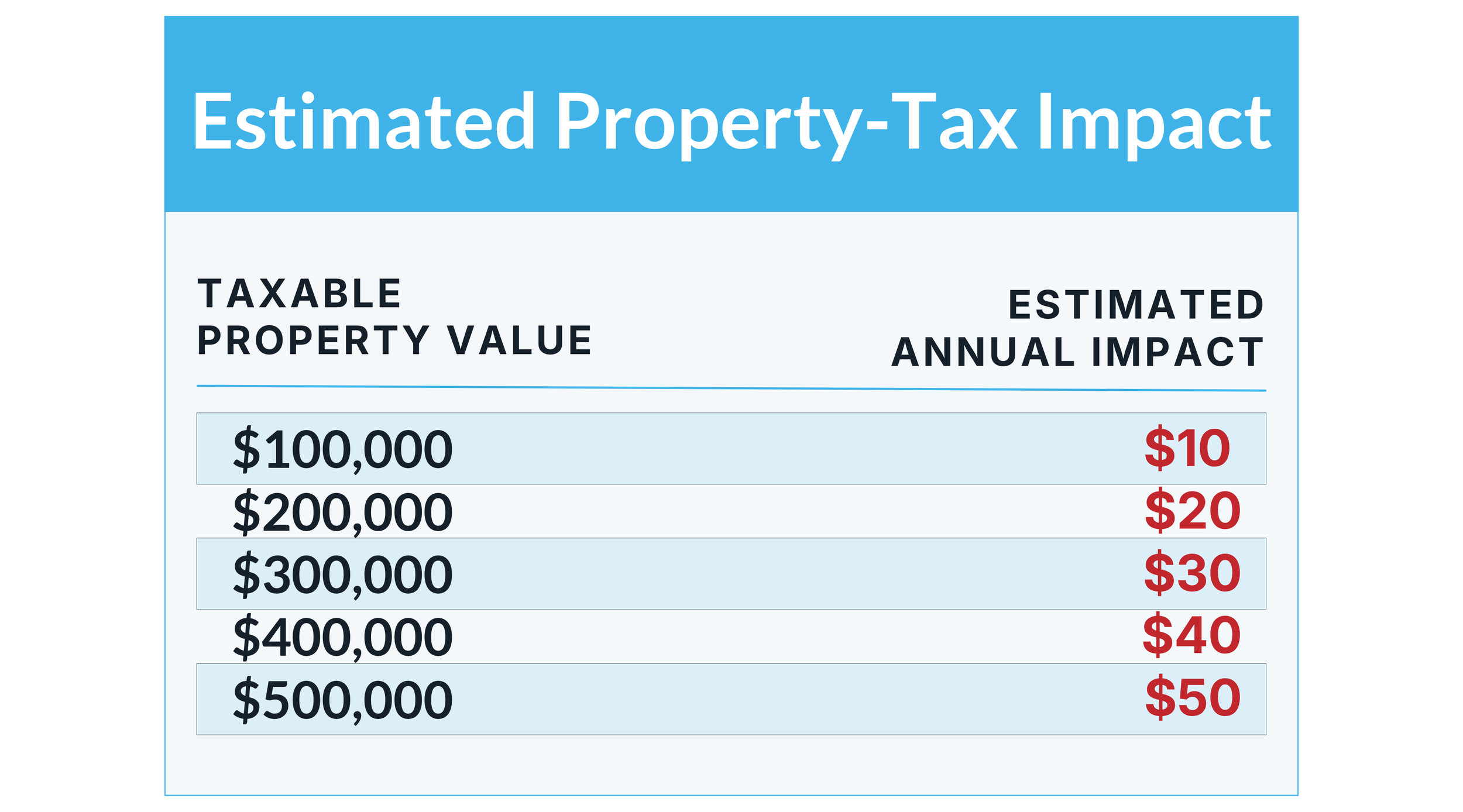
Taxable value is the value remaining after applicable exemptions have been deducted. Property values are determined by the county appraisal district, not Lumberton ISD.

How does the VATRE affect homeowners age 65 or older?
If you’re 65 or older and have filed for the Over-65 Homestead Exemption, your school property taxes are frozen and will not increase if the Lumberton ISD VATRE election is approved by voters. That’s state law.
Texas Tax Code §11.26 says:
“The amount of school district taxes imposed on the residence homestead of a person 65 years of age or older… may not be increased above the amount of the tax imposed in the first year in which the individual qualified for the exemption.”
This freeze remains in place as long as you own and live in your home unless you make significant improvements.
Questions about your property or exemptions? Contact the Hardin County Appraisal District:
409-246-2507
office@hardin-cad.org








Local & State Funding
How would one cent generate $2.5 million?
Based on current projections, for every $1 generated locally, Lumberton ISD would receive more than $2 in additional state funding.
The final amount may vary slightly based on enrollment, attendance, property values, and state funding formulas.
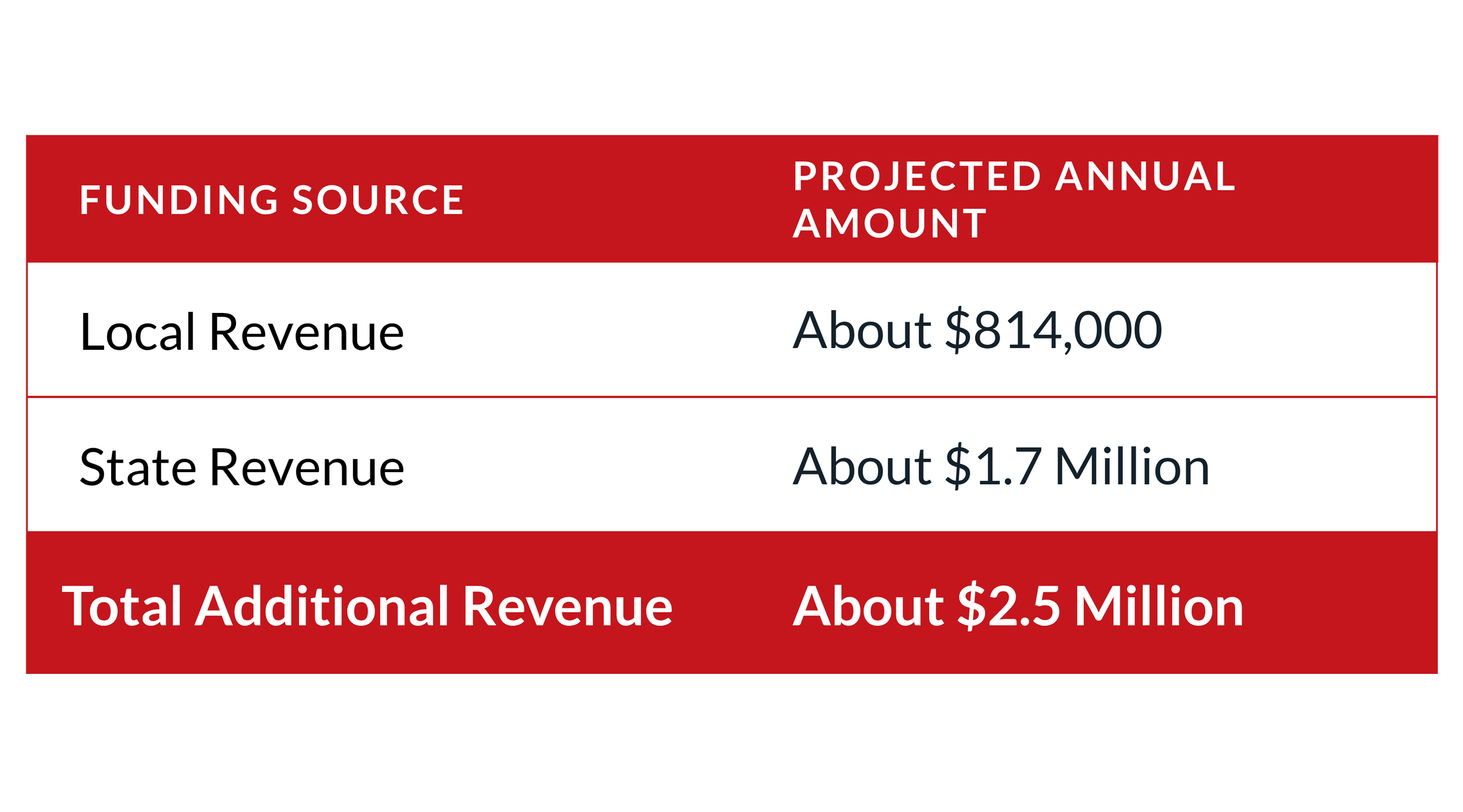
If approved, the VATRE is projected to generate:
What could the additional operating revenue support?
-
![]()
Teachers & Staffing
Recruiting and retaining qualified employees and maintaining staffing based on student and program needs.
-
![]()
Student Programs
Instructional programs, student services, classroom resources and other operating expenses.
-
![]()
Safety & Security
Safety personnel, equipment, emergency communication systems, training and facility maintenance related to school safety.
-
![]()
Essential Facilities
Transportation, technology, utilities, facility maintenance, repairs and other day-to-day district operations.
-
![]()
Mandated Class-Sizes
Maintaining required student-to-teacher ratios and staffing classrooms to meet state-mandated class-size requirements.





What the district has already done
Nearly $900,000
in Budget Reductions
Before calling the VATRE, Lumberton ISD reviewed expenses throughout its operating budget and:
Eliminated vacant positions rather than filling them
Reduced insurance costs
Reduced expenditures across the district
Evaluated and deferred some transportation, technology, and maintenance needs
Nearly $390,000 of the reductions came from vacant positions.
Why declining enrollment matters
Revenue Can Decline
While Costs Remain
Texas school funding is based largely on student attendance. When enrollment and attendance decline, the district receives less funding.
Lumberton ISD’s enrollment has declined by 243 students since fall 2025. Because the decline is spread throughout the district, it may not reduce the number of campuses, classrooms, employees or bus routes needed to serve students.
Election Outcomes
Two paths from Nov. 3
If the VATRE Is Approved
The total tax rate would increase by a net one cent.
The district is projected to receive approximately $2.5 million in additional annual operating revenue.
The revenue could be used for staffing, programs, safety, transportation, technology, maintenance and other operating expenses.
The Board would allocate the funding through the public budget process.
If the VATRE Is Not Approved
The total tax rate would not include the proposed increase.
The district would not receive the additional local revenue or associated state funding.
The district would continue to face its projected $1.5 million annual operating shortfall.
The Board would consider additional budget reductions.
Frequently Asked Questions
-
A Voter-Approval Tax Rate Election, or VATRE, allows voters to decide whether a school district may adopt a maintenance and operations tax rate that exceeds the district’s existing voter-approval tax rate. The additional M&O revenue may be used for daily operating expenses, including employee compensation, student programs, safety and security, transportation, technology, utilities and facility maintenance.
-
The Lumberton ISD VATRE will appear on the November 3rd ballot. Early voting begins October 19 and ends October 30.
-
Lumberton ISD is facing a $1.5 million annual budget shortfall caused by reduced state funding, declining enrollment, and rising operating costs. The VATRE allows voters to decide whether the district may access additional local and state operating revenue to maintain current levels of student programs and services.
-
No. A VATRE provides funding for the district’s daily operating expenses. This includes employee compensation, student programs, safety and security, transportation, technology, utilities and facility maintenance.
Bond elections provide funding for long-term capital projects, such as constructing and renovating facilities, purchasing land, replacing buses and purchasing major equipment.
-
No. The VATRE would provide additional operating revenue and would not authorize the district to issue bonds or incur new bond debt.
The Election
Understanding the Tax Rate
-
If approved, taxpayers would experience a net increase of one cent on the tax rate. The VATRE would increase Lumberton ISD’s Maintenance & Operations (M&O) tax rate by six cents. At the same time, the district will lower its Interest & Sinking (I&S) debt tax rate by five cents. Together, the two changes would result in a net increase of one cent in the district’s total tax rate.
-
A school district’s property-tax rate may include two components: an M&O rate for operating expenses and an I&S rate for voter-approved debt.
The Maintenance and Operations (M&O) tax rate pays for daily operating expenses, including payroll, student programs, utility bills such as electricity, natural gas, water, trash collection, phones, and internet, as well as school bus fuel and maintenance, technology, building maintenance and cleaning, and safety and security protocols.
The Interest and Sinking (I&S) tax rate is used to repay voter-approved bond debt for school facilities and other capital projects.
*The Total Tax Rate is simply the combination of the M&O and I&S tax rates.
-
The ballot refers to the proposed six-cent increase in the M&O tax rate because that is the portion of the tax rate subject to voter approval. The Board will lower the district’s I&S debt tax rate by five cents separately. When the six-cent M&O increase and five-cent I&S decrease are combined, the net increase in the total tax rate would be one cent.
-
State law restricts M&O and I&S revenue to different purposes. Revenue collected for debt service cannot simply be transferred to the operating fund. Voter approval is required for the district to adopt the proposed M&O rate.
The VATRE gives voters the authority to decide whether the district may access the additional M&O tax effort and the local and state funding associated with it. The board adopts the I&S rate separately based on the amount needed to meet the district’s voter-approved debt obligations.
-
A one-cent increase equals $10 per year for every $100,000 of taxable property value, after applicable homestead exemptions are applied. For example, a home valued at $240,000 receives a $140,000 property tax exemption, meaning the taxable value is $100,000 and the tax impact would be $10.00 per year.
Examples based on taxable values after homestead exemptions are applied:
$100,000 in taxable value: $10 per year
$200,000 in taxable value: $20 per year
$250,000 in taxable value: $25 per year
$300,000 in taxable value: $30 per year
$400,000 in taxable value: $40 per year
$500,000 in taxable value: $50 per year
-
No. Property values are determined by the county appraisal district, not Lumberton ISD. The Lumberton ISD Board of Trustees adopts the district’s tax rate. The appraisal district determines property values, and the tax office applies the adopted rate to each property’s taxable value when determining total taxes due.
-
Lumberton ISD’s current total tax rate is $0.95 per $100 of taxable value. In 2013, the district’s total tax rate was $1.16. If the VATRE is approved, the total tax rate would increase by one cent to $0.96 per $100 of taxable value.
-
No. The tax rate and dollar amount paid are frozen the year a taxpayer turns 65 years of age.
If you’re 65 or older and have filed for the Over-65 Homestead Exemption, your school property taxes are frozen and will not increase if the Lumberton ISD VATRE election is approved by voters. That’s state law.
Texas Tax Code §11.26 says:“The amount of school district taxes imposed on the residence homestead of a person 65 years of age or older… may not be increased above the amount of the tax imposed in the first year in which the individual qualified for the exemption.”
This freeze remains in place as long as you own and live in your home unless you make significant improvements. If you haven’t filed for the Over-65 Exemption, contact the Hardin County Appraisal District at 409-246-2507, or email office@hardin-cad.org for the application.
What It Would Cost
-
Lumberton ISD is projecting a $1.5 million annual operating shortfall due to changes in state funding, enrollment decline of 243 students since the fall of 2025, and rising operating costs resulting from inflation and other economic factors.
The district is entering its third consecutive year in which recurring expenses exceed recurring revenue, meaning the district has cut its budget each year for the last several years and has cut all it can without affecting student programs and services.
-
Reduced state funding, enrollment declines, and inflation have caused a significant budget shortfall. If approved, the VATRE would provide additional funding to help:
Protect student programs and services
Continue complying with state-mandated class-size limits
Retain quality teachers and staff
Maintain strong safety and security protocols
Address pressing facility maintenance, transportation, and technology needs
Before calling the VATRE, Lumberton ISD reviewed expenses throughout the budget and identified nearly $900,000 in reductions to protect taxpayers, classrooms and programs.
-
Texas school funding is based largely on student attendance. When enrollment and attendance decline, the district receives less funding. Lumberton ISD’s enrollment has declined by 243 students since fall 2025. Because that decline is spread across the district, it may not reduce the number of campuses, classrooms, bus routes or employees needed to serve students. Revenue can therefore decline while many operating expenses remain the same.
-
A districtwide enrollment decline does not necessarily mean an entire classroom, grade level, bus route, or campus can be eliminated. If several campuses each lose a small number of students, Lumberton ISD may still need the same number of teachers, classrooms, support employees, bus routes, and facilities. Utility bills also remain the same, or continue to increase annually just as they do for homeowners.
The district has managed to reduce staffing expenses by eliminating vacant positions rather than filling them. Additional staffing reductions could affect class sizes, programs and services.
-
Yes. Before calling the VATRE, Lumberton ISD reviewed expenses throughout its budget and identified nearly $900,000 in reductions this year, and even more over the last several years.
Those adjustments included:
Eliminating vacant positions rather than filling them
Reducing insurance costs
Reducing expenditures across the district
Evaluating and deferring some necessary transportation, technology and maintenance needs
-
Lumberton ISD has made nearly $900,000 in reductions without eliminating current student programs or services. With recurring expenses still exceeding recurring revenue, additional reductions could affect staffing, class sizes, programs or services.
-
The District has reduced staffing expenses by eliminating vacant positions rather than filling them. Nearly $390,000 of the district’s budget reductions came from these vacant positions.
-
Fund balance provides cash for emergencies, unexpected expenses, cash-flow needs and one-time expenditures. The Texas Education Agency’s School FIRST accountability system uses days of cash on hand as one measure of financial condition, with 90 days serving as an important benchmark. Fund balance is not a recurring source of revenue and cannot sustainably cover an ongoing annual shortfall.
-
Lumberton ISD has earned the state’s highest rating for fiscal responsibility, known as the Superior Achievement financial accountability rating for 10 consecutive years. The state’s Financial Integrity Rating System of Texas evaluates school districts using measures related to financial management and stewardship of taxpayer dollars.
District Finances
-
If approved, the VATRE is projected to provide $2.5 million each year in additional operating revenue. That includes $814,282 contributed by local Lumberton ISD taxpayers, and an additional $1.7 million from the state every year.
-
Texas uses a combination of state and local revenue to fund public schools.
Under the state’s school-finance formulas, eligible increases in local M&O tax effort generate a guaranteed minimum level of funding per student. If a district cannot generate that amount locally, the state provides the additional funding to meet the guaranteed minimum.
Based on current projections, Lumberton ISD’s proposed M&O tax rate would generate $814,282 locally and qualify the district for an additional $1.7 million from the state annually.
-
Two-thirds of the $2.5 million will be funded by the state if this VATRE is approved by voters. For every $1 generated locally through the proposed M&O tax rate, Lumberton ISD is projected to receive more than $2 in additional state funding. More than two-thirds of the projected additional revenue would come from the state if voters approve this VATRE on November 3rd.
-
Yes. State law guarantees additional funding for each eligible penny approved by voters. Based on current projections, the VATRE would generate approximately $814,000 locally and an additional $1.7 million from the state each year. That means for every $1 generated locally, the state would provide more than $2 in additional funding.
The exact amount may change slightly from year to year based on enrollment, attendance, property values and state funding formulas, but the district would continue to receive the state funding associated with the voter-approved tax rate.
-
NO. If the VATRE is not approved, Lumberton ISD would not receive the additional funding.
-
No. The additional VATRE revenue would be deposited into the district’s Maintenance and Operations (M&O) fund. It would not be used to repay bond debt.
The Interest and Sinking (I&S) debt tax rate is used to repay voter-approved bond debt and is separate from the M&O rate included in the VATRE.
Local and State Funding
What the Revenue Would Support
-
If approved, the additional operating revenue could be used to:
Maintain student programs and services
Maintain safety and security protocols
Recruit and retain qualified teachers and staff
Maintain staffing and comply with applicable state class-size requirements
Address transportation and technology needs
Complete necessary facility maintenance and repairs
Reduce the district’s reliance on fund balance
The Board of Trustees would determine how the additional revenue is allocated through the District’s public budget process.
-
The VATRE would provide additional operating revenue that would be used to maintain current programs and services. However, approval would not permanently guarantee that every program remains unchanged. The Board reviews enrollment, student needs, program results, staffing and available funding each year through the public budget process.
-
If approved, the additional revenue could be used to maintain staffing based on student needs, program requirements and applicable state class-size requirements. If the VATRE is not approved, additional staffing reductions could affect class sizes and programs.
-
Lumberton ISD’s operating budget pays for ongoing safety and security expenses, including:
Safety and security personnel
Security systems and equipment
Emergency communication systems
Required training and procedures
Facility maintenance related to school safety
Other measures used to maintain safe schools
These are recurring expenses and require recurring operating revenue.
Make a Plan To Vote
Early VOting
October 19 to October 30
election day
Tuesday, November 3
Polls open 7 a.m. to 7 p.m.